Robotic Kidney Cancer Surgery in India - Types
Robot-Assisted Partial Nephrectomy (RAPN)
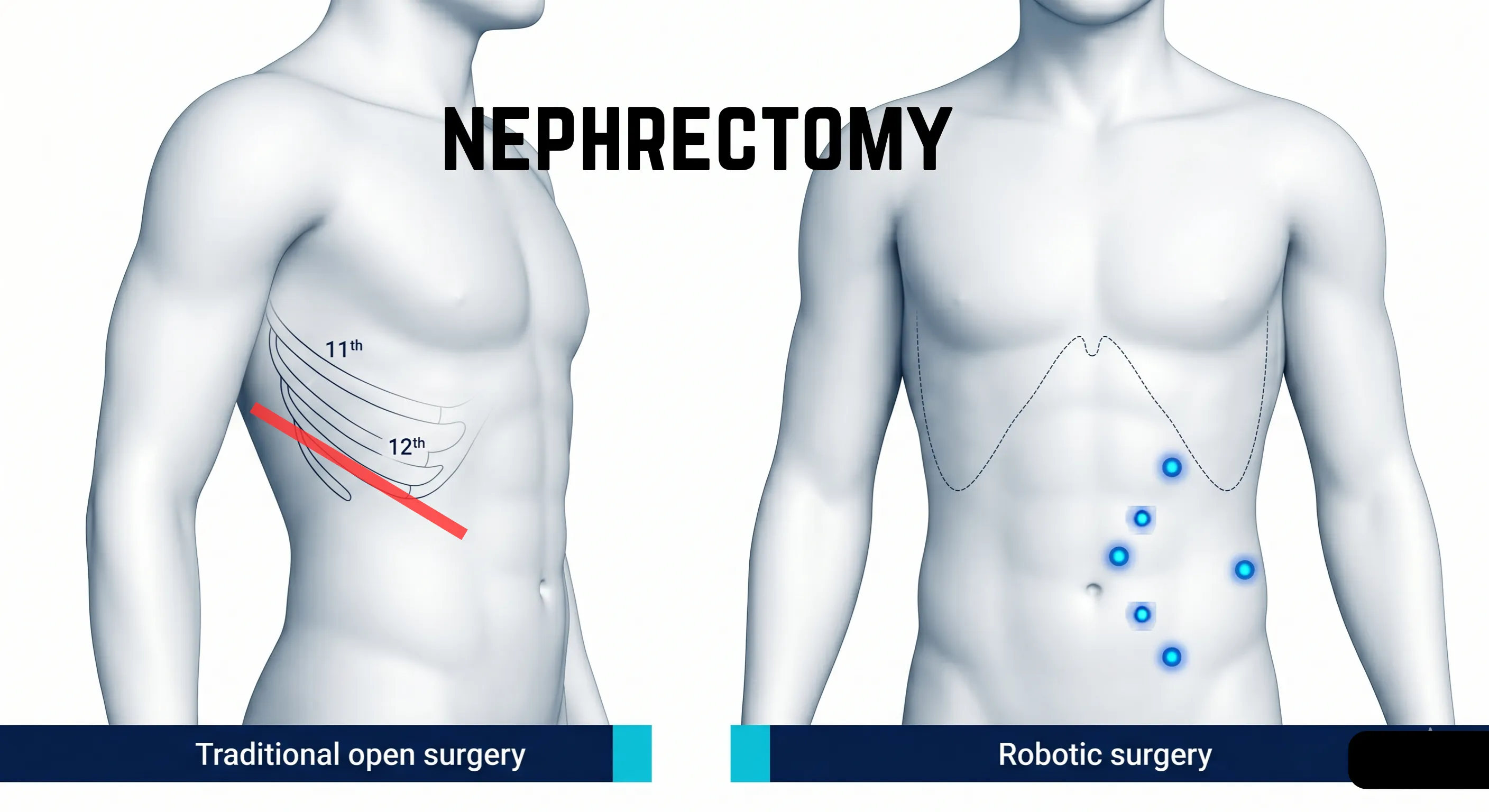
Robotic partial nephrectomy, is a minimally invasive procedure performed using surgical robotic arms to removes only the tumor and a small safety margin, preserving healthy remaining kidney tissue. It is the gold standard treatment for eligible kidney cancers and directly reduces the long-term risk of chronic kidney disease (CKD). By utilizing the Da Vinci Xi system, this technique provides enhanced precision and 3D magnified vision, ensuring superior cancer control compared to traditional methods.
Who should undergo Robotic Partial Nephrectomy Surgery?
RAPN is generally recommended for men who require definitive kidney cancer treatment and have small renal masses. Specifically, RAPN is the gold standard for those who:
-
Tumours up to 7 cm (T1 stage)
-
Patients with already reduced kidney function
-
Solitary Kidney
-
Bilateral (both-kidney) tumors
-
Patients at elevated risk for CKD
Advantages of RAPN over Open Surgery
✔ 10x magnified, high-definition 3D surgical vision
✔ Tremor-filtered, wristed robotic instruments for precision tumour excision
✔ Shorter warm ischemia time = better kidney function preservation
✔ Smaller incisions, less blood loss, faster recovery
Early diagnosis and intervention by a specialized uro-oncologist significantly improve long-term outcomes and survival rates.
Robot-Assisted Radical Nephrectomy (RARN)
When due to tumour or patient profile kidney preservation becomes unsafe, complete removal of the kidney is often recommended. This procedure is called Radical Nephrectomy. Robotic Radical Nephrectomy is a minimally invasive procedure performed using Da Vinci surgical robotic arms to remove then entire affected kidney. RARN is associated with better recovery profile, less blood loss, smaller incisions, less pain compared to Open Radical Nephrectomy.
Who Needs Robotic Radical Nephrectomy Surgery?
RARN is generally recommended for men who require definitive kidney cancer treatment and have large renal masses or comorbidities. Specifically, RARN is recommended for those who have:
-
Large Tumours >7 cm (T2 stage & Above)
-
Central hilar tumours not amenable to partial nephrectomy
-
Locally advanced or non-salvageable kidneys
-
IVC tumor thrombus (robotic IVC thrombectomy)
-
Patients having major comorbidities precluding complex reconstruction
Advanced RAPN Techniques: Where Expertise Makes the Difference
Warm Ischemia Time Management
During standard robotic partial nephrectomy, blood flow to the kidney is temporarily interrupted to produce a bloodless field to allow safe tumor removal. The longer this interruption (warm ischemia), the greater the risk to remaining kidney function.
Dt Rohan Patel is one of the few kidney caner surgeons in India who employs advanced techniques that minimizes warm ischemia time during RAPN to preserve renal function. Advanced techniques employed are:
-
Selective arterial clamping — blocking only the tumor’s blood supply, not the entire kidney
-
Early unclamping — restoring blood flow as early as possible during reconstruction
-
Off-clamp RAPN — tumor removal without any blood flow interruption in carefully selected cases
ICG Fluorescence Guidance
During standard robotic partial nephrectomy, it is difficult to identify normal renal and tumour margins with naked eye in renal bed as well as small renal vessels. By routinely using advanced imaging techniques with ICG technology, it enables:
-
Real-time segmental artery mapping before clamping
-
Perfusion assessment to confirm kidney blood supply after reconstruction
-
Precise tumor margin delineation for complex or endophytic lesions
These advanced techniques are not universally available and represent the frontier of robotic kidney cancer surgery in India.