


Best Urinary Incontinence Treatment Doctor in Ahmedabad, Gujarat | Dr Rohan Patel
What is Urinary Incontinence?
Urinary incontinence (UI) commonly known as the loss of bladder control or involuntary urine leakage, is a highly prevalent yet often underreported condition affecting both men and women. Many patients silently struggle with accidental urine leakage while coughing, sneezing, laughing, exercising, or even during sudden, intense urges to urinate.
Although urinary incontinence becomes more common as we age, it is not a normal or inevitable part of aging. You do not have to live with the embarrassment or let it limit your active lifestyle. Modern urology care offers highly successful treatments.
At Ananta Urology & Robotics Clinic, Dr. Rohan Patel; senior urologist in ahmedabad with more than 15 years of expertise provides world-class, advanced urinary incontinence treatment in Ahmedabad and across Gujarat for male and female UI. Utilizing evidence-based medical therapies, pelvic floor rehabilitation, and minimally invasive robotic surgical treatment, our goal is not just to stop the leakage, but to completely restore your confidence, sleep quality, and overall quality of life.
Advanced Urinary Incontinence Treatment in Ahmedabad- Our Services
At Ananta Urology & Robotics Clinic, we offer world-class, minimally invasive surgical interventions and advanced therapies to restore bladder control and quality of life for both men and women.
Female Urinary Incontinence Solutions
- Transobturator Tape (TOT) Sling
- Tension-Free Vaginal Tape (TVT) Sling
- Intravesical Botox Injections (OAB Treatment)
- Robotic AUS Implantation
Male Urinary Incontinence Solutions
- Artificial Urinary Sphincter (AUS) Implantation
- Male Advance Sling Placement
- Medical Management of Post-Prostatectomy UI
- Bulking Agents
Why Choose Dr. Rohan Patel for incontinence treatment?
Patients from Ahmedabad, Gujarat and throughout India trust Dr. Rohan Patel for his specialized expertise in reconstructive urology and pelvic floor restoration. As a fellowship-trained robotic urologist, Dr. Patel brings an elite level of surgical precision to complex pelvic anatomies. We provide absolute privacy, compassionate care, and access to the most advanced continence procedures available today.
Recognizing Incontinence Symptoms
Patients suffering from urinary incontinence may experience a range of symptoms. Rather than a single issue, it often presents as a combination of the following:
- Stress-Induced Leakage: Experiencing involuntary urine leaks during physical exertion, such as coughing, sneezing, laughing, running, or lifting heavy objects.
- Sudden Urgency: Feeling a sudden, overwhelming, and uncontrollable urge to urinate that cannot be delayed.
- Frequent Urination: Needing to visit the restroom abnormally often during the day.
- Nocturia (Night-time Urination): Waking up multiple times throughout the night with strong urges to urinate, disrupting normal sleep cycles.
- Continuous Dribbling: Experiencing a constant or frequent dribbling of urine due to an inability to empty the bladder completely.
- Bedwetting: Involuntary release of urine during sleep, which can affect both adults and elderly patients.
Don't Let Bladder Leaks Control Your Life
Whether it's a few drops when you laugh or a sudden urge you can't control, expert help is available. Regain your confidence today.
Book Your ConsultationTypes of Urinary Incontinence
Stress Urinary Incontinence (SUI)
Stress urinary incontinence occurs when any form of physical movement like exercise, cycling, coughing, sneezing or even laughing increases abdominal pressure above urinary sphincter pressure, forcing urine past a weakened sphincter. This is highly common in women after pregnancy or menopause due to weakened pelvic floor muscles, and in men following prostate surgery either radical prostatectomy or BPH surgery.
Urge Incontinence (Overactive Bladder)
Also referred to as Overactive Bladder (OAB), this involves a sudden, intense urge to urinate followed immediately by involuntary leakage. The bladder muscles spasm or contract prematurely, even when the bladder isn't full.
Mixed Urinary Incontinence
Many patients experience mixed incontinence—a combination of both stress (physical leaks) and urge (sudden spasms) incontinence, requiring a comprehensive, multi-step treatment approach.
Overflow Incontinence
This occurs when the bladder does not empty completely during regular urination, leading to a bladder that is constantly full and continuously dribbling urine. It is frequently caused by blockages like an enlarged prostate in men, people who store urine for long period of time or chronic incomplete bladder emptying.

Common Causes of Bladder Leakage
Common Causes in Women:
- Pregnancy & Childbirth: Vaginal delivery can stretch and weaken the pelvic floor muscles and damage vital bladder nerves, leading to pelvic organ prolapse and stress incontinence.
- Menopause: A significant drop in estrogen levels causes the tissues lining the urethra and bladder to thin and deteriorate, reducing natural urinary control.
Common Causes in Men:
- Post-Prostatectomy Incontinence (PPI): Radical prostatectomy (removal of the prostate for cancer) can sometimes disrupt or weaken the urinary sphincter, leading to stress incontinence.
- Enlarged Prostate (BPH): Benign Prostatic Hyperplasia can cause bladder outlet obstruction, leading to urge and overflow incontinence in older men.
Urinary Incontinence Diagnostics
To design the most effective treatment plan, we utilize advanced diagnostic tools to understand exactly how your bladder functions:
- Urodynamic Testing: A sophisticated, computerized study that measures bladder pressure, capacity, and sphincter strength to pinpoint the exact physiological cause of the leakage.
- Uroflowmetry: A non-invasive test that measures the volume and speed of your urine flow to check for obstructions or weak bladder muscles.
- Cystoscopy: A procedure using a tiny, flexible camera to look inside the urethra and bladder to rule out abnormalities, stones, or tumors.
Advanced Urinary Incontinence Treatment
At Ananta Urology & Robotics Clinic, we believe in a step-up approach to care, starting with the least invasive methods and advancing to state-of-the-art surgical interventions when necessary.
1. Conservative & Medical Management
- Pelvic Floor Physiotherapy: Targeted strengthening (Kegel exercises) to rebuild the muscles supporting the bladder and urethra.
- Medications: Prescription drugs that relax overactive bladder muscles, significantly reducing urgency and frequency like anti-muscarinics (solifenacin, oxybutynin etc) and beta 3 agonists (Mirabegron).
- Intravesical Botox Injections: For severe Overactive Bladder (OAB) that doesn't respond to medication, Botox can be injected directly into the bladder muscle to calm involuntary spasms.
2. Advanced Surgical Interventions
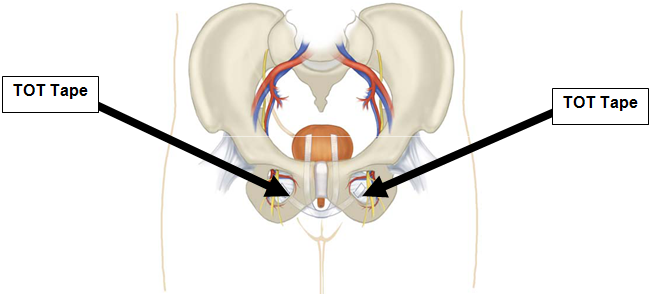
- TOT & TVT (Sling Procedures): Considered the gold standard for female Stress Urinary Incontinence, these minimally invasive procedures involve placing a biocompatible synthetic mesh tape under the urethra. This acts as a supportive "hammock," keeping the urethra closed during physical activity.
- Artificial Urinary Sphincter (AUS): For men suffering from severe stress incontinence—particularly after prostate surgery and females with severe SUI, the AUS device is a life-changing solution. It mimics a healthy sphincter, keeping the urethra firmly closed until the patient manually presses a hidden pump to urinate.
Looking for a Permanent Solution to Incontinence?
From advanced Urodynamic testing to minimally invasive sling surgeries and AUS implants, Dr. Rohan Patel offers world-class outcomes.
Call NowFrequently Asked Questions (FAQs)
When should I see a urologist for urinary incontinence?
You should schedule a consultation with an urologist if urine leakage is affecting your daily routine, interrupting your sleep, causing you to avoid social activities, or impacting your self-confidence. Early intervention often means simpler treatments.
Do I need surgery for urinary incontinence, or can it be cured with medication?
Surgery is not always necessary. Many patients achieve complete relief through pelvic floor exercises, bladder retraining, and targeted medications. Minimally invasive surgery is generally recommended only for moderate to severe cases, or when conservative treatments do not provide sufficient relief.
Can urinary incontinence be cured after prostate cancer surgery?
Yes. While temporary leakage is common immediately following a prostate cancer surgery, persistent post-prostatectomy incontinence can be successfully treated. Advanced surgical options, such as the Artificial Urinary Sphincter (AUS) or male slings, can restore complete urinary control for prostate cancer survivors.
Is TOT/TVT sling surgery safe for female incontinence?
Yes, mid-urethral sling procedures (like TOT and TVT) are globally recognized as safe, highly effective, and the gold standard for treating female stress urinary incontinence, offering high success rates and very fast recovery times.
Ready to Speak with the Best Urologist in Ahmedabad?
Take the first step towards a leak-free life. Schedule your thorough evaluation with Dr. Rohan Patel at Ananta Urology & Robotics Clinic.
Request Appointment on Whatsapp